Most people have a picture of Buddhism in their minds. Maybe it’s a quiet statue, a meditation app, or a saying on a coffee mug. But what do Buddhists actually believe? And what does a Buddhist do each day?
If you have ever wondered, this Sunday is a wonderful place to start.
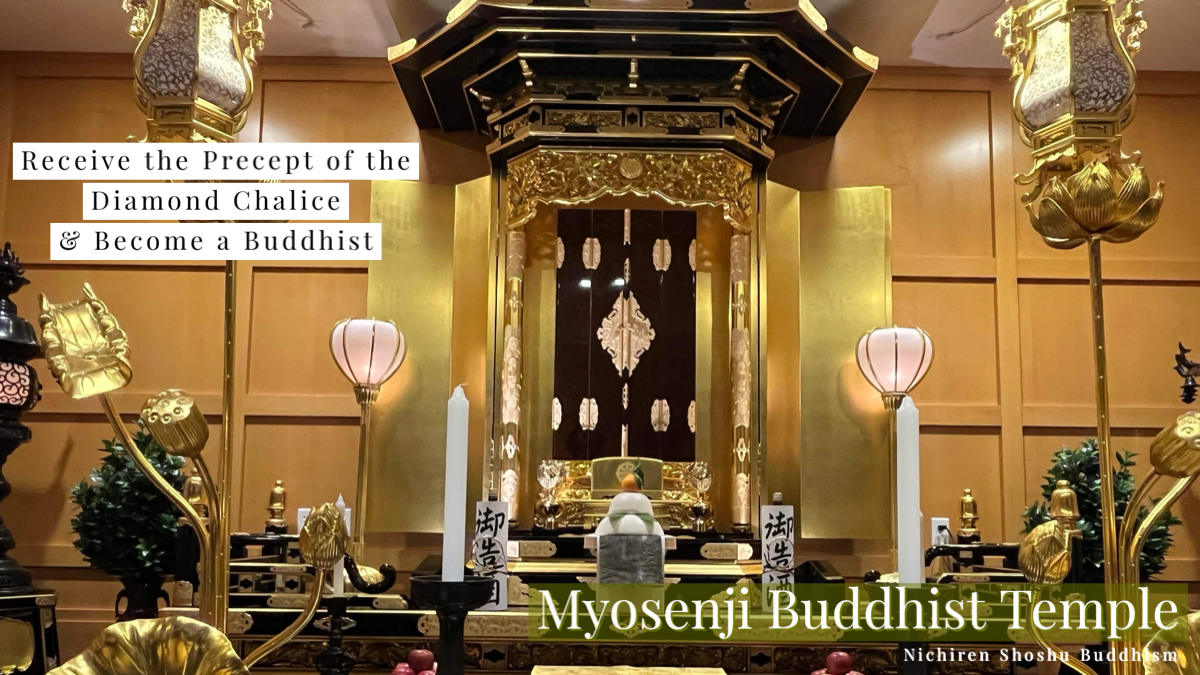
Chief Priest Rev. Sakabe will lead an Introductory Lecture on Buddhism’s Core Beliefs and Daily Practice at Myosenji Temple. You will hear, in plain English, what Nichiren Shoshu Buddhism teaches, who Nichiren Daishonin is, and what the daily practice of chanting Nam-Myoho-Renge-Kyo looks like in real life.
No background in Buddhism is needed. Come with your curiosity and your questions. There will be time to ask them.
Visit Our Buddhist Temple
Date: Sunday, September 27, 2026 Time: 2:00 to 3:15 pm ET Location: Myosenji Temple, 310 University Blvd West, Silver Spring, MD 20901
Have you ever noticed how quickly your entire day can turn around? One moment you feel calm and focused, and the next, a single stressful email or minor frustration leaves you feeling anxious, angry, or completely overwhelmed. Why do our internal states swing so dramatically? And more importantly, how can we gain control over them?
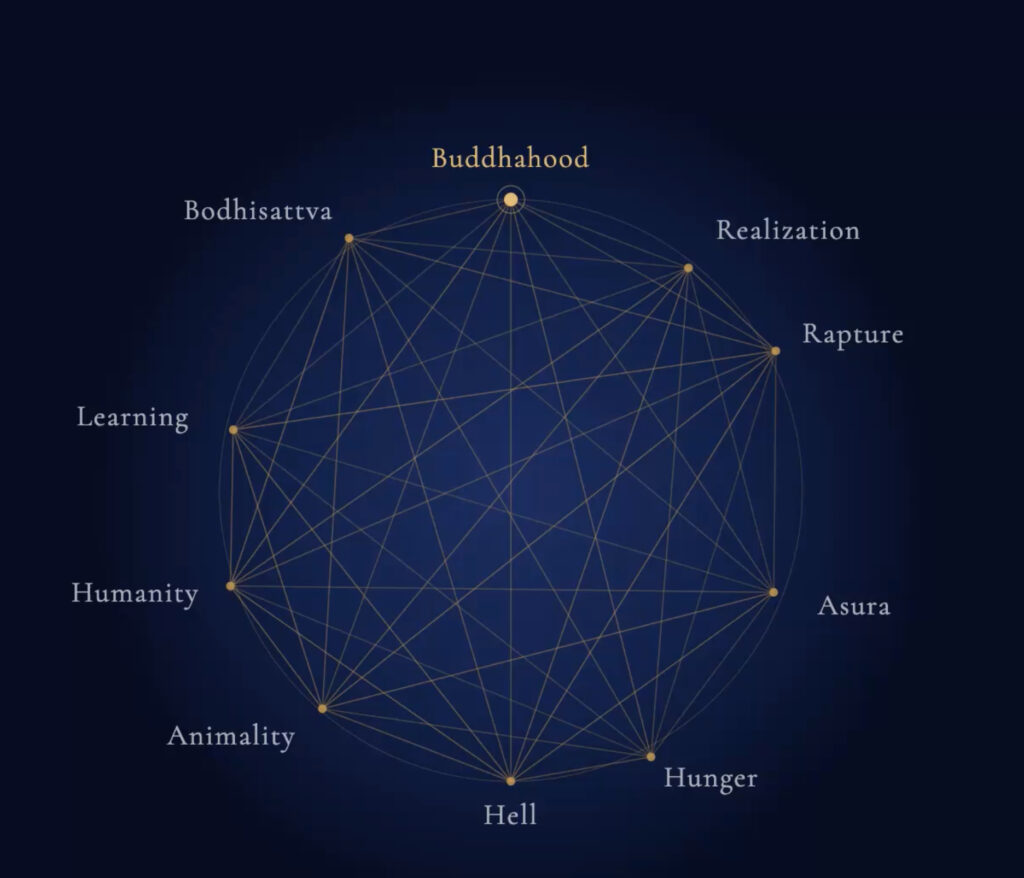
In Nichiren Shoshu Buddhism, the answer lies in a profound concept known as the Ten Worlds.
What You’ll Discover at the Lecture
In our upcoming introductory session, you will hear about:
The 10 States of Life: How to identify which world you inhabit most frequently.
Inner Transformation: Practical methods to raise your life condition when feeling stuck in stress or negativity.
The Continuity of Life: How the Ten Worlds offer clarity on life, death, and human potential.
Whether you are completely new to Buddhism or looking for practical wisdom to navigate modern life, this lecture offers a clear framework for building lasting resilience and peace of mind.
Join Chief Priest Rev. Sakabe this Introductory Lecture on Buddhism’s Ten Worlds. Everyone is welcome, and no background in Buddhism is assumed.
Date: Tuesday, September 22, 2026 Time: 7:00-8:00 pm EDT Location: Myosenji Temple Live Stream Register to receive the link to Sunday’s livestream. Call 301-593-9397, text 240-681-9397, or email info@nstmyosenji.org with any questions.
**Please note ALL times are Eastern Time (ET). Also, we do not record live streams for future viewing. We do hold our Introductory meetings monthly so if you miss one of the lectures you can attend next month.
A Buddhist answer to the question behind a hard year.
The job was secure until it wasn’t. The plan was sound until the funding moved. The rent went up anyway. If you live and work anywhere around Washington DC right now, you may have caught yourself asking a question you would not say out loud: what did I do to deserve this? Buddhism has an answer, and it is not the one most people expect. Karma is not punishment and it is not fate. It is cause and effect, and it runs in both directions. Your present may reflect past karma. Your future is yours to determine.
Karma is not destiny
The two get confused constantly, and the difference matters. Destiny means the outcome is already decided and your job is to accept it. Karma means something else entirely. Karma is the accumulated weight of your own thoughts, words, and actions, which makes it your own responsibility, and which means it can still be changed by effort. That is the whole difference between a verdict and a starting point.
Join Chief Priest Rev. Sakabe this Sunday for an Introductory Lecture on Karma and Buddhism. Everyone is welcome, and no background in Buddhism is assumed.
Date: Sunday, September 20 Time: 2:00-3:15 pm EDT Location: Myosenji Temple, 310 University Blvd West, Silver Spring, MD 20901 Format: In person or by livestream. Livestreams are not recorded. Register to receive the link to Sunday’s livestream. Call 301-593-9397, text 240-681-9397, or email info@nstmyosenji.org with any questions.
**Please note ALL times are Eastern Standard Time (ET). Also, we do not record live streams for future viewing. We do hold our Introductory meetings monthly so if you miss one of the lectures you can attend next month.
You have a Buddha nature. It has been there the whole time, buried under cultural norms and teachings that told you to look up and wait instead of looking in and acting. When something painful happens, Americans ask what they did to deserve it. Behind that thinking is an imaginary courtroom, an imaginary judge weighing our behavior and handing down rewards and punishments. Nichiren Shoshu Buddhism has no such courtroom. There is no punishment, because there is no judge. There is cause and effect. Every thought, word, and action plants a cause, and effects appear when conditions ripen. Your suffering is not a sentence handed to you. It is a result from seeds you planted.
This is the best news you will ever hear. If hardship is an effect, you are free right now to make a new cause. Nichiren Shoshu Buddhism calls this hendoku iyaku, turning poison into medicine. Where the illness or the loss becomes the very thing that deepens your life in a way ease never could. Stop asking what you did to deserve this. Ask what cause you will make now.
“The six sense organs form the window that allows information to enter one’s body; if this window is clouded, the correct information cannot be taken in. However, if your six sense organs are pure and not clouded, one can correctly recognize and evaluate external phenomena. From this, the correct way of thinking and action are born (excerpted from The Doctrines and Practice of Nichiren Shoshu, p.252).”
Visit Myosenji Buddhist Temple SUNDAY August 30, 2026 at 2pm for our next Introductory lecture with our Chief Priest, Rev Sakabe on Buddhism’s Core Beliefs & Practice. He will explain how Buddhist practice lets you abandon your delusions, change your karma and become happy to help others to do the same. Register Today https://nstmyosenji.org .
**Please note ALL times are Eastern Standard Time (ET). Also, we do not record live streams for future viewing. We do hold our Introductory meetings monthly so if you miss one of the lectures you can attend next month.
We often think of karma as something fixed, a fate handed to us that we simply have to live out. Nichiren Daishonin’s Buddhism teaches something far more hopeful: that the causes we make in each moment shape our lives, and that we have the power to change our karma from this day forward. This introductory lecture at Myosenji Temple explores what karma really is, why our circumstances are not our destiny, and how a consistent Buddhist practice lets us transform even our deepest struggles into sources of growth and good fortune. Whether you are new to Buddhism or simply curious, you will leave with a clear, practical sense of how to start making your own good news.
Date: Tuesday, August 18, 2026 Time: 7:00 PM ET Location: Live stream only Register Today at https://nstmyosenji.com
Myosenji Temple offers a regular monthly Introductory lectures on Buddhism. Please register to join us at Myosenji Temple or via our Live Stream for this series.
Look at your own morning and you will find several of the worlds above. You slept through your alarm and already dread the day. Traffic makes you seethe (Hell). The coffee finally hits and everything feels fine again (Humanity). Someone cuts in front of you and you say nothing, because that is just how it goes (Animality).
Nichiren Shoshu Buddhism teaches the mutual possession of the Ten Worlds. Every one of the ten contains the other nine. The person who woke up in Hell at seven in the morning is not a different person from the one who shows up for someone else at noon. All ten are in you, right now, all the time.
Which means the real question is never what kind of person you are. It is where you are showing up from.
And Buddhahood is not somewhere far away, waiting for a better version of you. It is the tenth world, already present in the same life that lost its temper in traffic. Chanting Nam-Myoho-Renge-Kyo to the Gohonzon is how we call it forward.
Introductory Lecture on Buddhism’s Ten Worlds With Chief Priest Rev. Sakabe
Date: Sunday, August 16, 2026 Time: 2:00 PM ET Location: Myosenji Temple, Silver Spring, MD Format: In-person and livestream
Myosenji Temple offers a regular monthly Introductory lectures on Buddhism. Please register to join us at Myosenji Temple or via our Live Stream for this series.
For over 750 years, Nichiren Shoshu Buddhism has offered humanity a practice that is not rooted in wishful thinking — but in real, verifiable results. At its heart is the powerful chanting of Nam-Myoho-Renge-Kyo, a practice that activates the highest potential within your own life. Unlike passive philosophies that simply ask you to accept suffering, Nichiren Shoshu Buddhism is dynamic, action-oriented, and accessible to anyone regardless of background or belief. Countless practitioners around the world have experienced profound transformations — in their health, relationships, finances, and inner peace — through consistent, sincere practice. This is not blind faith. This is a time-tested, living Buddhism that meets you exactly where you are and empowers you to be happy in this lifetime. Powerful. Positive. Proven.
Myosenji Temple offers a regular monthly Introductory lectures on Buddhism. Please register to join us at Myosenji Temple or via our Live Stream for this series.
You’re warmly invited to Myosenji Temple’s Open House on Saturday, July 11, 2026 from 2-3 PM — an afternoon of peace and purpose here in the Washington, DC region. Since 1972, our temple has opened its doors to curious visitors and longtime friends alike, and this is your chance to step inside, hear the chanting, and enjoy the quiet beauty of Nichiren Shoshu Buddhism firsthand. You’ll also have the opportunity to meet our Chief Priest, Rev. Sakabe, who will be glad to answer any questions you may have about the temple and its practice. Whether you’re exploring a path of compassion and inner strength for the first time or simply looking for a peaceful moment, you’re welcome exactly as you are. The event is free and open to all. Join us at 310 University Blvd West (entrance on Brunett Ave), Silver Spring, MD — no RSVP needed, just bring an open mind and your questions.
KARMA and Buddhism Sunday, July 19th at 2pm ET (in-person or live stream)
Buddhism’s Ten Worlds Tuesday, July 21st at 7pm ET (live stream only)
Core Beliefs + Buddhist Daily Practice Sunday, July 26th at 2pm ET (in-person or live stream)
*Please note ALL times are Eastern Time (ET). Also, we do not record live streams for future viewing. We do hold our Introductory meetings monthly so if you miss one of the lectures you can attend next month.
Have you ever felt the sting of anger, the ache of hunger for more, or the quiet relief of true joy — sometimes all in the same day? Nichiren Shoshu Buddhism calls these the Ten Worlds, a centuries-old framework that maps out every state of mind we move through as human beings. Join us this 2pm Sunday JUN 21st at Myosenji Temple or on the live stream for a free Introductory Lecture and discover what this Buddhist wisdom reveals about your own inner life — register today – in-person or live stream.
Buddhism’s Ten Worlds Sunday, June 21st at 2pm ET (in-person or live stream)
Core Beliefs + Buddhist Daily Practice Sunday, June 28th at 2pm ET (in-person or live stream)
KARMA and Buddhism Sunday, July 19th at 2pm ET (in-person or live stream)
Buddhism’s Ten Worlds Tuesday, July 21st at 7pm ET (live stream only)
Core Beliefs + Buddhist Daily Practice Sunday, July 26th at 2pm ET (in-person or live stream)
*Please note ALL times are Eastern Time (ET). Also, we do not record live streams for future viewing. We do hold our Introductory meetings monthly so if you miss one of the lectures you can attend next month.
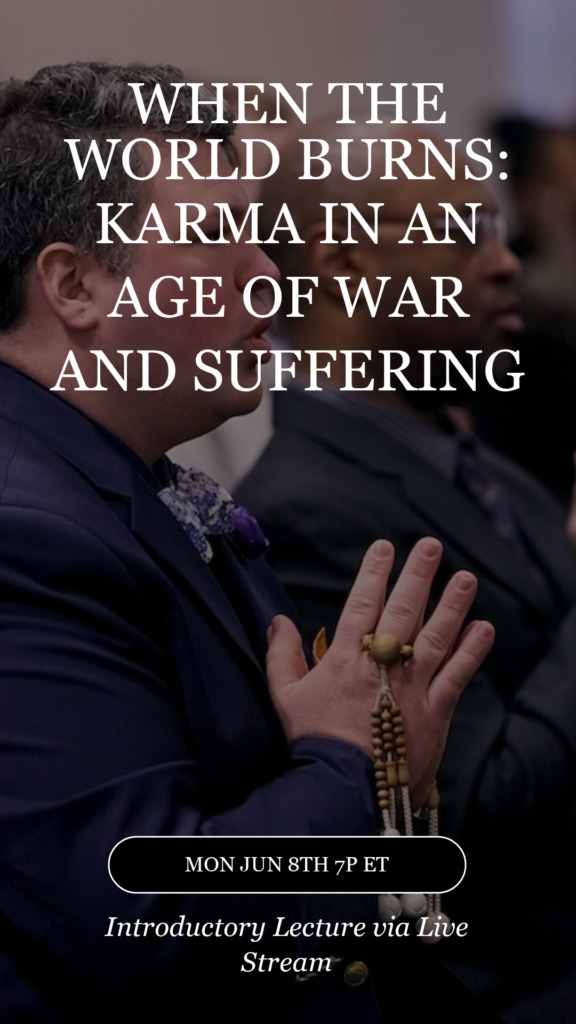
The world feels heavy right now — war, rising costs, and uncertainty at every turn. It’s easy to feel like life is just happening to us. But Buddhism teaches something powerful: you are not powerless. Through the transformative practice of chanting, you can shift your energy, change your karma, and create real hope — for yourself and the world around you. Join us and discover how to change your Karma today.
If you are curious about what chanting Nam Myoho Renge Kyo can do for you, we warmly invite you to join us for an introductory lecture by our Chief Priest. He will teach you how to chant using Juju beads, and then a Q&A. Register today
MON June 8, 2026KARMA Introductory Lecture with Chief Priest Rev Sakabe7pm EDT (livestream only)
SUN June 21, 2026Buddhism’S TEN WORLDS Introductory Lecture with Chief Priest Rev Sakabe2pm EDT (in-person or livestream)
Myosenji Temple offers a regular monthly Introductory lectures on Buddhism. Please register to join us at Myosenji Temple or via our Live Stream for this series.